6 min read

Arwa Abdulkarim
Product Marketing Manager
Would you like to read a summary of the article?
Summarize with ChatGPT
Summarize it with Claude
Summarize it with Perplexity

A fashion business might start very simply: a good product, an Instagram account, and messages from customers asking about the price, size, and color. The problem begins when this method succeeds; every new order means another conversation, more data to be collected, and a size, color, and address to be verified. As orders increase, the approach that helped you start may become the very thing that makes growth harder.
This is roughly what happened with (Al-Alia), the abaya brand founded by Amira Al-Faraj in 2018, which started receiving orders manually via WhatsApp and Instagram before transitioning to an integrated online store. Each conversation took at least two minutes to collect product, size, color, shipping, and delivery details, and as orders grew, the process became increasingly difficult.

But the striking part of the (Al-Alia) experience is not just the transition to the online store, but what she did afterward. From organizing orders to recovering hesitant customers, developing the storefront, and offering different payment options and promotions; there is a set of decisions that any fashion store can learn from.
1. Do not make conversation your order management system
WhatsApp and Instagram are important channels for communicating with customers, but there is a difference between using conversation to answer a question and using it to manage the entire purchasing process. In the early days of (Al-Alia), Amira manually collected product, size, color, shipping, and delivery data from each customer, and as orders grew, this became a burden on her and the team.
Transitioning to the store shifted these details from conversations to an organized purchasing process, and managing orders, invoices, shipping, and product data was streamlined into one place. The idea here is not to stop using social media, but to give each channel the role it excels at.
If you sell through social networks, do not measure the success of the method solely by the number of orders you can receive today, but also ask: What will happen if the number doubles? Keep the conversation for helping the customer and answering their questions, and make selecting the product, size, and color, entering details, and payment and shipping part of a clear journey that the customer can complete on their own.
2. In fashion, hesitation does not always mean the customer changed their mind
Choosing a piece of fashion is not an automated decision. A customer might like the abaya, select it, reach the cart, and then stop; maybe she needs time, wants to compare, or simply got busy before completing the order. (Al-Alia) treated this stage as an opportunity to win back the customer, using abandoned cart targeting to reconnect with customers who did not complete their purchase.

A customer who added a product to their cart has shown a much higher level of interest than someone just visiting the store. Therefore, before you always spend to reach a new customer, it is useful to look at the customers who have already reached an advanced stage of the buying journey and did not complete it.
And do not always start with a reminder. Start by asking: Why does the customer stop here? Do they need clearer information about the size? Does the shipping cost appear too late? Do they need time to make a decision, or do they simply need a reminder?

3. Do not make discounts the only offer you know
"Al-Alia" used offers and bundles among the tools that supported the store's growth, which is a point worth noting, especially in fashion; because an offer does not always have to mean lowering the price of the item itself. You can bundle complementary products, design a promotion tied to an occasion, or increase the order value by adding another product that makes sense to the customer.
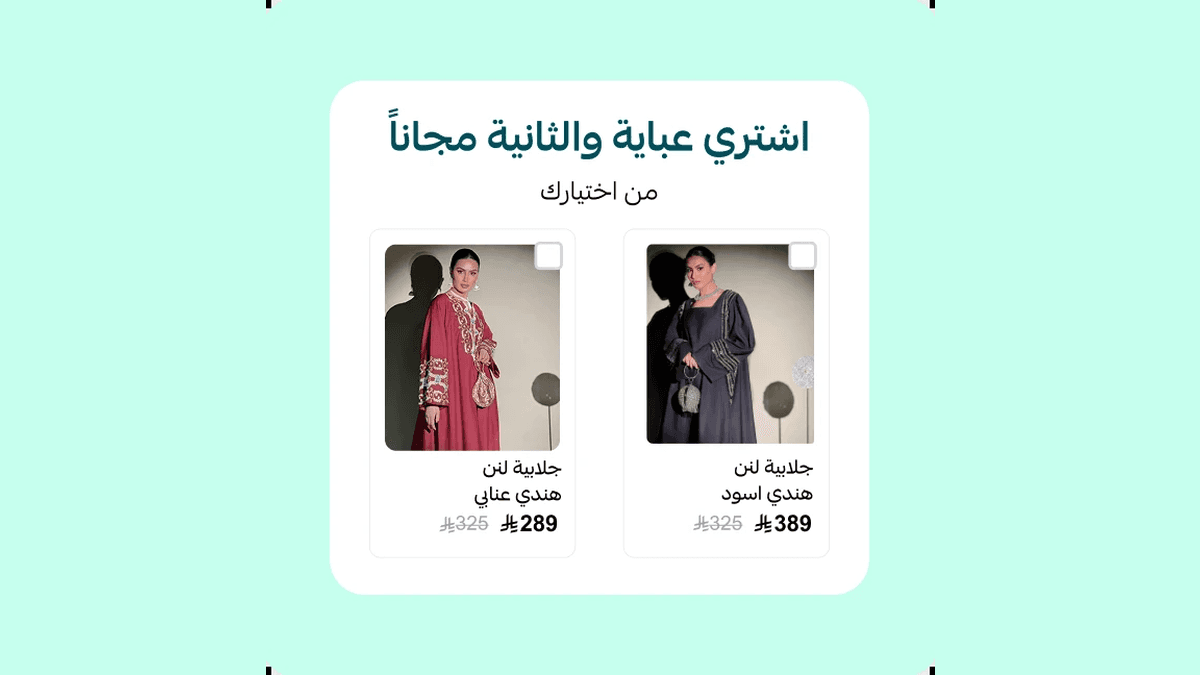
Before launching a new discount, ask: Can I make the offer more valuable instead of just making the product cheaper? Start with products that customers buy together, occasions when buying behavior changes, and products that complement each other. Sometimes, the way products are bundled is just as much a part of the offer's appeal as the price itself.
4. Ease of payment is part of the fashion buying experience
"Al-Alia" enabled payment options like Tabby and Tamara within the store's checkout journey. The importance of this step is not in adding as many payment methods as possible, but in reducing barriers for the customer when they reach the moment they decide to buy. Payment flexibility can become even more important when the cart value rises or the customer buys more than one item.
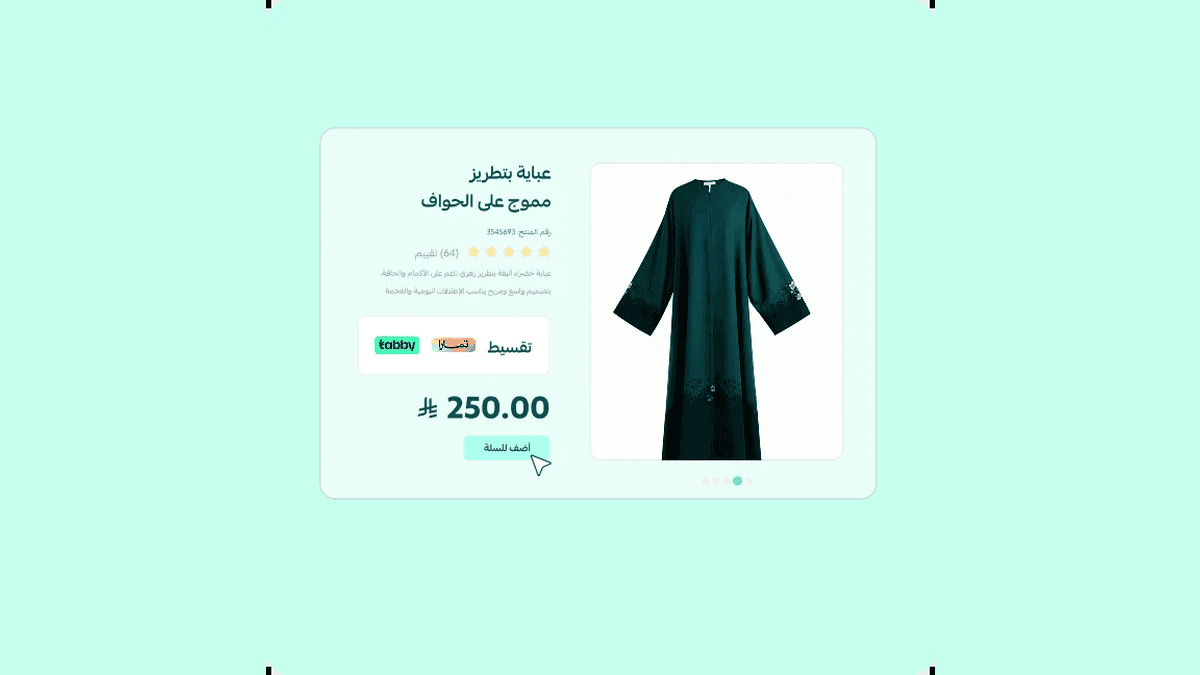
Therefore, review the payment stage from the customer's perspective, not from the store settings perspective. Do they clearly know the options available to them? Do they find a payment method that suits them? And do any unexpected costs or details appear to them in the final step?

5. A fashion storefront is not a project you finish once
One of the striking details in the "Al-Alia" experience is that she bought three templates to continuously improve the store. The number itself is not what is important as much as the idea behind it: the store was not treated as a storefront that is built once and then left as is.

This is particularly important in fashion; the product is visual, collections and seasons change, and what the customer needs to see today might differ in a few months. Therefore, instead of just asking: "Is my store design beautiful?", add a more important question: Does it help the customer shop?
Monitor the clarity of categories, how products are displayed, ease of access to important collections, and what the customer sees first on mobile, then improve the experience based on what you discover. Beauty is important for a fashion store, but good design does not just make the product look good; it makes finding, choosing, and buying it easier.
What tied these decisions together?
When looking at the entire "Al-Alia" experience, we do not find a single action that created the growth. The issue started with manual operations, then the order journey became more organized, and after that, other needs emerged: recovering a hesitant customer, presenting better offers, facilitating payment, and improving the store's look and experience.
This is perhaps the most important takeaway from the experience:
Store growth does not always come from attracting more visitors, but from improving what happens to the customer who has already reached you.
If you run an abaya store, look at your customer's journey today, step by step: Where do they arrive from? What do they need to make a choice? Where might they hesitate? What happens if they do not complete their order? And what might make them come back again?
You may not need to change the whole store; you might just need to know where the next step worthy of improvement lies.
How to Build a Growing Fashion Store? 5 Lessons from the Experience of (Al-Alia) Abayas
6 minutes read

Wholesale Abayas for Companies and Stores: A Guide to Building a B2B Channel
10 minutes read
From Selling on Instagram and WhatsApp to an Abaya Store: A Transition Plan Without Losing Your Customers
10 minutes read
Arwa Abdulkarim
Product Marketing Manager
11
Article
Featured author
E-commerce
How to Build a Growing Fashion Store? 5 Lessons from the Experience of (Al-Alia) Abayas
(Al-Alya)'s experience shows that the growth of a fashion store does not solely depend on attracting new traffic; rather, it relies on organizing the buying journey, reducing hesitation, recovering abandoned carts, offering suitable deals, facilitating payment, and continuously improving the store experience.
6 minutes read
Arwa Abdulkarim

Fashion
Wholesale Abayas for Companies and Stores: A Guide to Building a B2B Channel
Start selling abayas wholesale with a clear offer for a specific segment, including the catalog, quantities, prices, sample, and delivery. Test a calculated demand before expanding the channel.
10 minutes read
Mohammed Al-Anazi

Fashion
From Selling on Instagram and WhatsApp to an Abaya Store: A Transition Plan Without Losing Your Customers
Maintain your accounts and relationship with female customers, and gradually transition abaya selection, payment, and shipping address to the store. Start with clear products and test demand before expanding the launch.
10 minutes read
Mohammed Al-Anazi
Fashion
How to move your abaya shop online and manage inventory for both channels together?
Start by auditing every model, size, and color, and unifying the codes; then test the integration of the cashier and the store, as well as the cancellation and exchange procedures. Expand after stabilizing inventory and fulfillment.
11 minutes read
Mohammed Al-Anazi