


7 min read

Salla Blog
Salla Growth Team
Would you like to read a summary of the article?
Summarize with ChatGPT
Summarize it with Claude
Summarize it with Perplexity

In this day and age, product marketing has become crucial to the success of all businesses. Whether you are a small business owner, an entrepreneur, or even running a large-scale enterprise, the ability to effectively market your products plays a decisive role in sustaining your business and boosting your revenue.
Undoubtedly, achieving success in marketing and understanding how to market a product requires a well-thought-out strategy and ongoing effort. The question "How do I market my products?" may seem perplexing at first. However, with the right planning and sound execution, this challenge can be turned into a distinct opportunity to strengthen your market position and reach a broad audience of potential customers. Salla provides the answers in this article, guiding you through comprehensive steps that will help you market your products with ease using realistic, practical tips and strategies you can apply to your own business.
What do we mean by marketing our products?

To begin the process of product marketing, you must first understand the core of your recurring question: "How do I market my products?" Simply put, this process refers to bringing your product to market, promoting it, and ultimately selling it to the customer. It certainly encompasses understanding your target audience, as well as leveraging strategic e-commerce websites and messaging to increase your revenue and boost demand for your products and services.
The essence of marketing, and the core of the question: "How do I market my products?"

Below, we have broken down the essence of marketing into 6 key actionable steps you should take to achieve the optimal ways to market the products and services you offer:
1. The term "marketers" is by no means synonymous with "producers"
Following your initial question, "How do I market my products?", it is essential to realize that general marketers—namely social media marketers and content marketers—should not be placed in the same category as product producers. They may not have a complete, in-depth understanding of your product, which can hinder them from marketing it properly across the channels your customers use. As a product marketer, your job does not necessarily revolve around executing marketing campaigns or writing copy. Instead, your role is to empower specialized teams to market your products effectively.
The first step in answering the question "How do I market my products?" is to deliver a pitch deck or presentation document that clearly outlines your product marketing strategy to other marketers. This way, when the time comes to execute a marketing strategy, they will have full clarity on the specific positioning they are targeting, the messaging they should employ, and the personas they are addressing.
2. Capitalise on your blog
A blog is often considered primarily as a hub for generating leads.
How? Instead of attempting to push product details everywhere, you can produce distinctive content—such as helping your audience resolve a problem or offering them a free guide or e-book to provide further value.
For example, Salla's blog post entitled "Sales and Marketing Management: Two Lungs for Your Business" aimed to differentiate between sales management and product marketing. Readers can gain significant value from reading articles and blogs focused on content marketing and impactful strategies, especially anyone searching for effective, unique solutions to the question: "How do I market my products?"
Although the blog post remains informative rather than overtly promotional, it still effectively promotes a product or service. This way, you will find yourself helping many of your customers while consistently encouraging them to explore your offerings. Check out now: Online Product Promotion in 5 Optimal Ways.
3. How do I market my products between the lines?
If you have had a long-term marketing strategy in place prior to beginning your product marketing efforts and asking the accompanying question, "How do I market my products?", you can market your product retroactively across existing collateral. In other words, if you already possess an extensive library of blog posts and e-commerce insights, you can update them with details about your products. You can also update recent social media posts, as such mentions are entirely natural over time.
It is also advisable to adjust your website content to showcase your new product, utilizing internal links from relevant pages to drive traffic to your new product pages.
Furthermore, if your marketing team has previously created marketing presentations, you can ask them to refresh the deck and include a call to action (CTA) inviting users to try your latest product.
Take Daffa Bookstore on the Salla platform, for example: it is a cultural store aimed at sharing and curating diverse fields of science and reading arts by fostering an enriching culture of knowledge.
How do cultural stores of this kind market their book collections?
They often adopt this subtle, "between-the-lines" content marketing approach by highlighting the educational books they carry, providing summaries, and engaging with everything surrounding literature and reading—such as discussing notable authors and their memorable quotes, presenting rich scientific, cultural, and artistic topics through long-form articles, or publishing short social media posts. They also rely on newsletters via Mailchimp to remind readers of new arrivals and discounts (the importance of which we will highlight below, following these steps).
We must acknowledge the true power of marketing through a content strategy and never underestimate it. For instance, this bookstore achieved remarkable milestones during its very first year alone, hosting over 1,444 books on its Salla storefront, attracting more than 75,000 visitors, serving over 1,500 readers and book enthusiasts, and selling upwards of 2,700 books.
4. Enjoy co-marketing with a complementary brand
Co-marketing offers an exciting and effective way to market your product to an audience that shares common ground and touchpoints with another related brand. You can run simple, highly effective initiatives such as co-producing a video, writing a collaborative guest blog post, cross-posting on each other's social channels, or co-hosting a webinar.
You might be asking yourself now: "How do I market my products alongside my competitors?" To be clear, your product should be an ideal match for the other company's audience. Moreover, both products can be used concurrently without directly competing. For example, Ankor Software and HubSpot co-hosted a webinar, yet Ankor Software does not compete with HubSpot CRM; rather, it complements it.
5. Activate Pay-Per-Click (PPC) advertising
Pay-Per-Click (PPC) is a foundational product marketing tactic and an immediate answer to "How do I market my products?" While content and social media marketing help generate inbound leads, you can capture the attention of more prospects by launching PPC ads on search engines.
When setting up a Pay-Per-Click (PPC) campaign, do not just bid on generic product keywords like "product marketing management software" or "how do I market my products"; target your own brand terms and competitors' terms as well. This way, customers evaluating a competitor's product will see you as a compelling alternative.
6. Focus on benefits, not features
Regardless of the channel or platform you use to promote your product, strive to highlight the tangible benefits customers will gain, rather than just the product's features. Features alone rarely evoke emotion; instead, they can overshadow the benefits and alienate non-technical customers.
Does this mean we should disregard features entirely? Absolutely not. The key is to leverage them to reinforce the benefits you deliver—such as knowing precisely where your leads originate or saving time by automating workflows. For example:
Attract visitors via blogs, social media, and paid ads.
Convert visitors into customers through dedicated landing pages, email marketing, and marketing automation.
Track ROI through comprehensive revenue attribution reports.
Adopting a benefit-first narrative will attract customers and encourage them to experience your products.
A real-world example addressing "How do I market my products?"
Mailchimp
There are dozens of marketing tools and email platforms on the market, but Mailchimp was never deterred by the competition. In fact, the company outperformed its rivals by redefining expectations—positioning itself as far more than just an email marketing tool. It is an all-in-one marketing platform that helps businesses grow. Mailchimp primarily focuses on end-user benefits rather than solely on technical features.
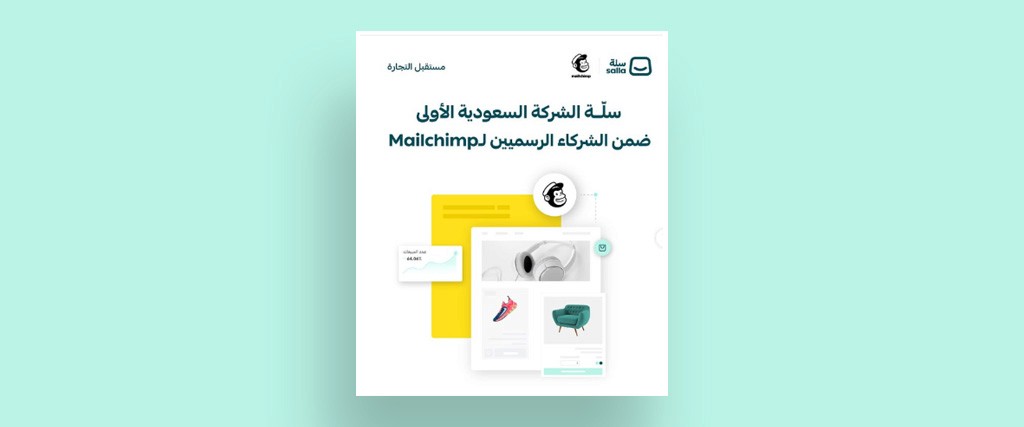
Incidentally, Mailchimp—a global leader in digital marketing—chose Salla and its merchant ecosystem, making us the very first Saudi company to become one of their official partners.
* Key advantages of integrating your Salla store with Mailchimp:
Analyze customer behavior and target audiences with precision using automated email campaigns.
Boost conversion rates by tailoring marketing campaigns and tracking performance to optimize retargeting.
Reduce abandoned carts by sending automated reminder messages that encourage customers to complete their purchases.
Finally, remember that achieving success in marketing demands patience and dedication. Do not expect overnight results after finding the answers to "How do I market my products?" Good things take time to grow and make an impact. Simply start with the right fundamentals, consistently refine your strategies, and keep iterating—and step by step, your products and business will thrive, God willing.

Salla Blog
Salla Growth Team
190
Article
Featured author

Digital Marketing
10 social media features that make you unique among competing businesses
Many online users prefer one social network over another because it has certain features that distinguish it from the rest. What are the most prominent of these features? Salla lists them for you here...
6 minutes read
Salla Blog

Digital Marketing
Stealth marketing: the art of influencing customers without their knowledge
Picture this: you're watching a cultural show on YouTube, the host opens the interview by offering their guest some sweets as hospitality, and the cameras zoom in on the packaging of the sweets and the "brand" name…
4 minutes read
Salla Blog

Digital Marketing
Your comprehensive guide to paid social media marketing to boost sales for your store
Your comprehensive guide to paid social media marketing. It is the nature of business to experience periods where demand slows down, and customer visits or interest in the product decline,…
7 minutes read
Salla Blog

Digital Marketing
The art of turning psychological needs into marketing copy to attract customers
If you are looking for marketing catchphrases to attract customers, you should first ask yourself (Why?) is it important to use catchy and impactful phrases when marketing your products and services?…
5 minutes read
Salla Blog


