


7 min read

لمى عبدالرحمن
كاتب محتوى أول
Would you like to read a summary of the article?
Summarize with ChatGPT
Summarize it with Claude
Summarize it with Perplexity

Do you have two sales channels?
Watch the full success story of Shatha Boutique.
Having an online store and a physical branch doesn’t just mean you have two sales channels. You have a single promise to deliver across two places: that the item is available when the customer chooses it, and that payment, orders, and inventory are displayed in a workflow your team understands.
Shatha Boutique's experience highlights this challenge. Prior to Salla Point, sales were recorded manually and disconnected from inventory, tied to a POS machine with monthly fees, and lacked real integration between orders, payments, and stock. Following the transition, the boutique eliminated traditional hardware and recurring fees, automating both inventory and payment workflows.
This isn't merely about a new device. It’s about a smoother workday for your team, quicker decisions for your customers, and data you don't have to hunt down across multiple places.

Before heading to the cashier, check the item
In-store sales might seem to begin at the cashier, but in reality, they start well before. They begin the moment a customer inquires about a colour or size, requiring the employee to verify actual stock availability. This brings up a critical question that can reshape the entire experience: Does the online store know what the branch sold just moments ago?
When sales aren't linked to inventory, every order turns into an extra follow-up task. The team might have to manually update quantities, check records, and fix an error that could have been avoided from the outset. As your range of styles, sizes, and colours expands, this ceases to be a minor administrative detail—it directly impacts the quality of the service your customer experiences.
In the Shatha Boutique story, sales were initially disconnected from stock, but everything was subsequently integrated using Salla Point. While the story does not specify a quantitative sales uplift from this integration—meaning specific revenue figures cannot be attributed to it—the practical takeaway remains evident: if an item is sold across two locations, its inventory data must be unified.
Apply it to your store: Learn how to manage and audit inventory and adjust stock levels in the Salla Help Centre.
A practical test for your team: Pick an item sold both in-store and online. If its quantity requires a manual update after a sale, you have found the very first touchpoint that needs integration.
Every time information is transferred manually, the risk of error travels with it
From a screen to a spreadsheet, from the branch to the online store at the end of the day, or from payment records to order logs. These steps may seem straightforward when order volumes are low, but over time, they drain your team's focus and obscure critical details.
Shatha Boutique’s journey reflects the lack of integration among orders, payments, and stock prior to switching. Following the transition, operations became automated and interconnected. The value here lies not just in cutting out a step, but in turning fragmented sales operations into a unified workflow that the team can easily understand and track.
Map out your sales journey as it currently operates. The customer picks an item, the employee rings up the sale, stock levels update, payment is registered, and the order is logged for review. Next, factor in real-world test cases: cancellations, exchanges, returns, or sudden stock changes. If any step requires manual data entry, it’s not just a minor issue—it’s an indicator of where you need to start improving.

Apply it to your store: Learn how to manage Salla Point cashier settings in the Salla Help Centre.
What reduces stress? A good system doesn't ask the team to remember what happened; it keeps everything visible right in front of them.
The customer doesn't see the system, but they feel it
Customers never see inventory logs or cashier settings, yet they immediately feel their impact. If a team member has to manually verify stock availability, or if payment is delayed because a device needs charging, an operational hitch instantly turns into a frustrating wait for the customer.
This was precisely the challenge faced by Shatha Boutique before adopting Salla Point: a card terminal that needed constant charging and would shut down unexpectedly, causing payment delays and awkward moments with customers. Following the shift, the story details a checkout experience that is fast, secure, and modern.
That’s why you shouldn’t review branch operations solely from behind a desk. Step up to the point of sale. Does the staff member know what to do when stock availability changes? Is the payment process straightforward? Do they know how to handle an exchange or a return? Every store encounters edge cases, but a smooth customer experience ensures those bumps stay behind the scenes.
Apply it to your store: Learn how to install and set up the Salla Point app on your mobile phone in the Salla Help Centre.
The customer experience starts here: Customers don't buy from your system, but they immediately feel whether it is helping them or slowing them down.
Payment is part of the journey, not an isolated step
Not every customer is ready to complete a purchase the same way. Some might select an item in the boutique and request a direct payment link, while others prefer to finalise the order after a quick review. In the Shatha Boutique story, direct payment links were among the tools deployed alongside automated inventory and payments.
The real value isn't just in sending a link whenever a customer asks, but in ensuring the team knows when to use it and how to track the order once payment is made. When payments are connected to orders and inventory, the customer journey remains clear, and every transaction is captured in an organized record.
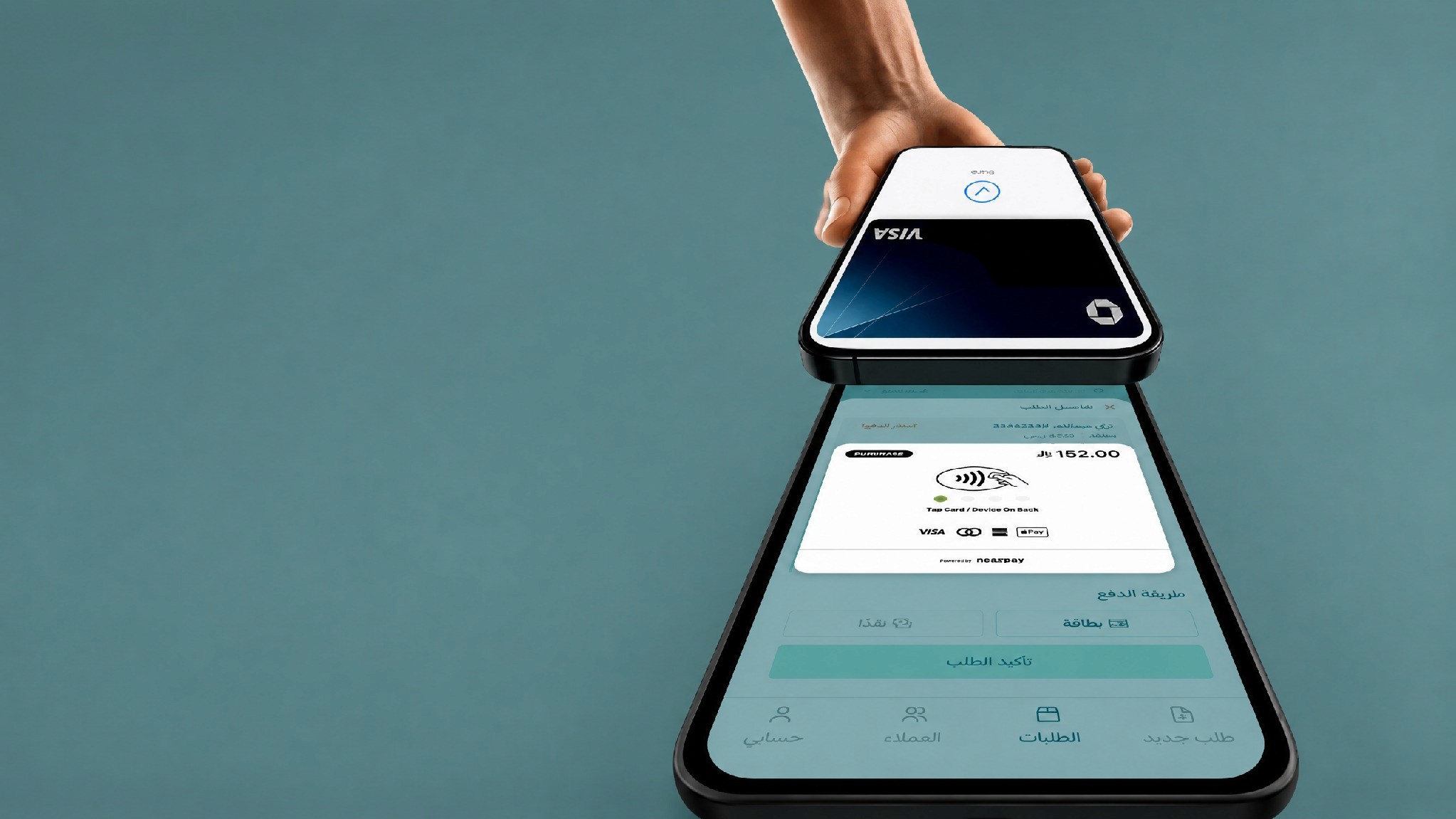
Apply it to your store: Discover the payment methods available to complete orders at the cashier in the Salla Help Centre.
The real benchmark: Seamless payment isn't just about having more options. It means both the customer and the team know exactly what happens after every selection.
The Hidden Costs
Hardware pricing or subscription fees might be the first things you look at when comparing options, but they aren't the only expenses you incur. In Shatha Boutique's experience, monthly fees were charged even when the POS device wasn't in use, on top of the initial hardware cost. There is also an additional cost that doesn't appear on a single invoice: the team hours lost to manual sales entries, reconciliations, audits, and rectifying errors caused by disconnected operations.
Before evaluating any solution, account for two types of costs. The first is direct: hardware, subscription, or transaction fees. The second is operational: How often are customers left waiting? How many minutes do staff spend on manual data entry? And how many decisions are delayed because information is fragmented across different platforms?
While the Shatha Boutique story doesn't promise guaranteed figures, it raises an essential question: Are you simply paying for a tool, or are you also paying the ongoing cost of keeping your operations disconnected?
The point worth calculating: Sometimes the highest cost isn't what you pay for the system, but what you pay every single day because your operations aren't communicating with each other.
Unify your sales operations from a single hub
Your physical branch and online store don't need identical customer journeys, but they do require a single operational source of truth: the same products, the same inventory, the same orders, and a clear record your team understands.
The Shatha Boutique team sums up their experience by saying:
Before any event or in-person pop-up, review your Salla Point setup.
“Salla Point was the missing piece every merchant needed to complete their business. It is more cost-effective, easier to use, faster, and fully connected to inventory.”
Owner of Shatha Boutique
Shatha Boutique’s journey is a prime example of a thriving abaya business that started with a brick-and-mortar boutique and expanded online. Explore Salla's tailored solutions for abaya stores and launch your online store today.
Start with a single item sold both in-store and online. Track its path from the moment it's picked right through to updating stock levels and recording the payment. If you have to transfer data manually more than once, you’ve pinpointed your quickest opportunity for operational improvement.
Is selling digital cards profitable? Calculate profit and set the selling price
6 minutes read

Wholesale Digital Cards: How to Choose the Supplier and Sourcing Method?
5 minutes read
What are the requirements for selling digital cards in Saudi Arabia? A guide before launching your store
6 minutes read
لمى عبدالرحمن
كاتب محتوى أول
3
Article
Featured author

E-commerce
Is selling digital cards profitable? Calculate profit and set the selling price
Selling digital cards can be profitable, but total sales don't tell you how much you actually keep. Start with the cost of the card, payment gateway fees, fulfillment, marketing, and expected refunds, then compare what's left against your store's fixed expenses. If your margin is thin, sales might increase while your…
6 minutes read
Mohammed Al-Anazi

E-commerce
Wholesale Digital Cards: How to Choose the Supplier and Sourcing Method?
Choosing a gift card supplier doesn't start with the lowest price on the list. You need a reliable source, clear authorisation to resell the products you choose, accurate details regarding country and denomination, and a way to resolve issues if an order gets stuck. Then, compare prices, availability, and integration to suit...
5 minutes read
Mohammed Al-Anazi

E-commerce
What are the requirements for selling digital cards in Saudi Arabia? A guide before launching your store
Before you sell your first digital card in Saudi Arabia, you need to sort out two aspects together: clear e-commerce activity for the customer, and your right to sell the card you will be offering. Setting up a store and accepting payments does not, by itself, prove that the supplier allows you to resell every code in their catalogue. On the other hand…
6 minutes read
Mohammed Al-Anazi

E-commerce
How to Open a Gift Card Store on Salla: From Choosing the Platform to Managing Your Orders
You can start a digital card store on Salla with just a few products, as long as you know their source, how to sell them, prepare a clear page for each card, and test a complete order before directing people to the store. The starting point isn't designing a grand storefront; the real start is ensuring the right product gets delivered…
6 minutes read
Mohammed Al-Anazi


